Table of Contents
ToggleFever in Kids: When Is It Actually Dangerous? A Torrance Parent’s Guide (2026 Update)
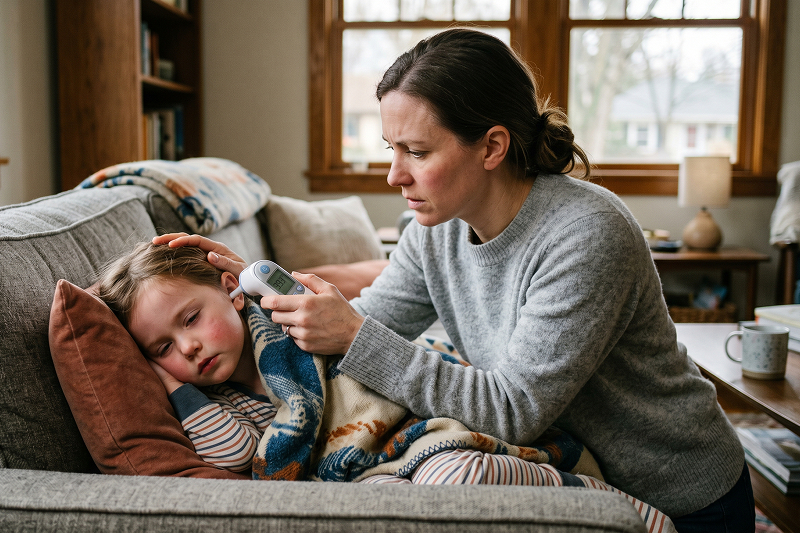
Spring in Torrance often brings a familiar concern for parents, your child feels warm, looks tired, and suddenly you’re searching for answers. Should you monitor at home or head to Urgent Care Torrance right away?
Fever is one of the most common reasons parents seek immediate medical help, but the real challenge isn’t the temperature, it’s knowing what that fever means.
If you’re a parent here in the South Bay, you’ve likely been in this situation: your child comes home from school unusually quiet, maybe skipping dinner, maybe more irritable than usual.
You check their temperature, it’s high. Now the questions start.
Is this normal?
Should I wait it out?
Is this something serious?
Here’s the reality: fever is not the enemy. It’s the body doing its job.
According to the American Academy of Pediatrics, fever is a natural immune response that helps the body fight infections. Most fevers in children are caused by viral illnesses and resolve within a few days.
But what makes fever confusing, and sometimes dangerous, is how differently children respond to it.
Some kids will run around with a 102°F fever like nothing is wrong. Others may have a mild fever but appear weak, dehydrated, or unusually sleepy. That’s why pediatric care in 2026 has shifted away from focusing only on temperature. Doctors are now trained to assess behavior, hydration, breathing, and responsiveness first.
For Torrance parents, this matters even more during seasonal transitions. Spring brings increased exposure to allergens, viral infections, and classroom-transmitted illnesses across schools in the Torrance Unified School District. Add changing coastal weather patterns, and fever becomes one of the most common triggers for urgent care visits.
At some point, most parents will search for a Pediatric walk-in clinic near me, not because they want convenience, but because they want clarity. They want to know they’re making the right decision for their child.
This guide is designed to give you that clarity. No panic. No outdated advice. Just practical, evidence-backed insights to help you decide what to do, when it matters most.
Fever Myths vs Facts (2026 Update)
Fever has always been surrounded by misinformation. And in high-stress moments, myths can lead to poor decisions.
Let’s reset the baseline.
Myth: A higher fever means a more serious illness
Not necessarily. A child with a high fever can still be stable if they’re hydrated, alert, and responsive. On the other hand, a child with a lower fever but low energy or poor responsiveness may need immediate evaluation.
Myth: You must bring fever down immediatel
Fever itself isn’t harmful in most cases. Treating it is more about keeping your child comfortable than “normalizing” the number.
Myth: Fever always needs antibiotics
Most childhood fevers are viral. Antibiotics won’t help unless there’s a confirmed bacterial infection.
The Centers for Disease Control and Prevention continues to emphasize symptom-based care over reflexive treatment. For parents, this means shifting focus from fear to observation.
Age-Based Risk: Why Age Changes Everything
One of the biggest mistakes parents make is treating all fevers the same. Age dramatically changes risk levels.
Infants (0–3 months)
Any fever here is serious. Even a temperature of 100.4°F (38°C) requires immediate medical attention. Infants don’t have fully developed immune systems, so infections can escalate quickly.
Babies (3–12 months)
Fevers are more common and usually less dangerous, but context matters. If your baby is feeding poorly, unusually irritable, or lethargic, don’t wait.
Toddlers & School-Age Kids
This is where most confusion happens. Kids in this group frequently get fevers from viral infections, especially in school environments. What matters most is behavior:
- Are they playing at all?
- Are they drinking fluids?
- Are they responding normally?
The National Institutes of Health highlights that behavioral changes are often the earliest indicators of complications.
“Looks Fine But Isn’t”, Subtle Warning Signs Parents Miss
This is where experience matters, and where most parents second-guess themselves.
You might think: “They still look okay, maybe I’m overreacting.”
But certain subtle changes can signal that something isn’t right:
- Your child is quieter than usual and not engaging
- They’re sleeping more but hard to wake
- They’re refusing fluids or eating very little
- Their breathing seems faster or slightly labored
- They complain of body pain but can’t explain it clearly
These are early behavioral red flags.
A key takeaway: Don’t rely only on the thermometer. Watch your child.
When to Choose Urgent Care vs ER: A Practical Torrance Guide
This is the decision point most parents struggle with.
Choose Urgent Care if:
- Fever lasts more than 48–72 hours
- Symptoms include sore throat, ear pain, or mild cough
- Your child is uncomfortable but responsive
- There are mild dehydration signs (less appetite, reduced urination)
Urgent care centers are built for exactly these situations, fast, efficient, and without the stress of ER-level escalation.
Go to the ER Immediately if:
- Your child has trouble breathing
- There’s a seizure
- They’re extremely drowsy or unresponsive
- Lips or skin appear bluish
- There’s persistent vomiting or severe dehydration
In these cases, time matters more than convenience.
Why Torrance Parents Often Get This Decision Wrong
Living in Torrance comes with unique variables. Coastal humidity, seasonal allergens, and school exposure create overlapping symptoms, fever, cough, fatigue, that can blur the line between mild illness and something more serious.
Parents often fall into two patterns:
- Overreacting → rushing to ER for mild fevers
- Underreacting → waiting too long when behavior changes
The goal is balance. Not panic. Not delay.
What Actually Helps When Your Child Has a Fever
Simple actions make the biggest difference:
- Keep your child hydrated consistently
- Let them rest, don’t force activity
- Use fever reducers only if they’re uncomfortable
- Monitor behavior every few hours, not just temperature
Avoid overcomplicating care. Consistency matters more than intervention.
The 2026 Parenting Rule: Focus on Behavior First
Modern pediatric care has evolved.
Doctors now prioritize:
- Responsiveness
- Hydration
- Breathing patterns
- Energy levels
The temperature is just one data point, not the decision-maker.
For parents, this shift is empowering. It means you don’t have to panic at every spike in temperature. You just need to observe, assess, and act when necessary.
FAQs
1. What fever is too high for a child in Torrance?
A fever above 102°F is high, but not always dangerous. Seek care if it’s paired with unusual behavior, breathing issues, or dehydration.
2. When should I take my child to urgent care for fever?
If the fever lasts more than 2–3 days or your child is uncomfortable and not improving, urgent care is the right step.
3. Can a child have a serious illness with a low fever?
Yes. Some conditions show mild fever but serious symptoms like lethargy or poor responsiveness.
4. Is it okay to let a fever run its course?
Yes, if your child is otherwise active, hydrated, and comfortable. Monitor closely.
5. Why does my child get frequent fevers during school season?
Exposure to viruses in school environments increases infection rates, especially during seasonal transitions in Torrance.